Prevent GLP-1 Muscle Loss: 400-Calorie High-Protein Dinners That Protect Strength
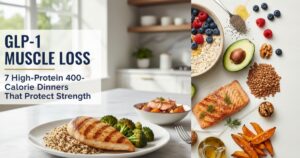
GLP-1 medications are known for one powerful effect: they significantly reduce appetite. Many people feel full faster, eat smaller portions, and naturally cut calories without trying. While that can support fat loss, it can also create an unintended problem. When overall food intake drops quickly, protein intake often drops with it.
This is where GLP-1 Muscle Loss becomes a real concern. Rapid weight loss, especially when protein is too low, can lead to a decline in lean muscle mass. And muscle is not just about appearance. It plays a critical role in metabolism, daily strength, blood sugar stability, and long-term fat control. Losing muscle can slow progress and make it harder to maintain results.
If appetite suppression has made meals smaller and less structured, it may be time to rethink dinner strategy. (For earlier meal ideas that support fullness naturally, see 7 Breakfast Recipes That Mimic GLP-1 Fullness Naturally (No Pills Needed).)
These structured 400-calorie high-protein dinners help protect lean mass while you lose fat, giving your body what it needs without increasing total calories.
Why GLP-1 Muscle Loss Happens
Appetite suppression is one of the main reasons people lose weight quickly on GLP-1 medications. But when hunger drops significantly, protein intake often drops too. Smaller portions may mean fewer total calories, yet they can also mean fewer essential amino acids needed to maintain muscle tissue.
This is where GLP-1 Muscle Loss can begin. When the body is in a calorie deficit and does not receive enough protein — especially without resistance training — it may break down lean mass along with fat. Rapid weight loss increases this risk, particularly if meals are unstructured or heavily carbohydrate-based.
Research on calorie restriction and lean mass decline, including findings published through institutions like the National Institutes of Health, shows that insufficient protein during weight loss can accelerate muscle breakdown. This makes GLP-1 and muscle preservation an important conversation, not just weight loss alone.
Older adults are at even higher risk because muscle naturally declines with age. Without deliberate protein intake and strength-focused movement, lean mass can decrease faster than expected.
Signs You May Be Losing Muscle (Not Just Fat)
- Feeling weaker when lifting groceries or everyday objects
- Clothes fitting looser but arms or legs feeling softer
- Lower daily energy despite eating less
- Noticeably slower metabolic rate
- Reduced workout performance or stamina
How Much Protein GLP-1 Users Actually Need
Standard protein recommendations are often too low for people actively losing weight. For muscle protection, a general guidance range of 0.8–1.2 grams per pound of lean body mass is commonly suggested in clinical nutrition discussions. This helps support repair, recovery, and satiety during a calorie deficit.
For individuals managing their protein intake on semaglutide, the key is consistency. Protein should be spread evenly across meals instead of concentrated in one sitting. Dinner becomes especially important because it supports overnight muscle repair during the longest fasting window of the day.
According to guidance frequently referenced by sources such as Harvard Health, adequate protein during weight loss helps protect lean tissue while fat is reduced. Structured meals with intentional protein distribution can help prevent muscle loss on GLP-1 naturally without increasing total calories excessively.
Protein also plays a powerful role in hunger hormone regulation and long-term appetite control. If you want a deeper breakdown of how protein stabilizes cravings, see Why Your Hunger Hormones Are Out of Control (And How Protein Fixes It).
7 High-Protein 400-Calorie Dinners to Prevent GLP-1 Muscle Loss
When appetite is reduced, dinner becomes a strategic opportunity to protect lean mass. These are ideal high-protein meals for GLP-1 users because they are structured, portion-controlled, and built around approximately 400 calories. Each meal delivers enough protein to support muscle repair while keeping total intake aligned with fat loss goals.
Every 400 calorie high-protein dinner below is designed for muscle preservation, steady energy, and overnight recovery. If you want additional structured meal ideas that support fullness and craving control, see High-Protein High-Fiber Meals for Craving Control.
1. Grilled Chicken + Quinoa + Roasted Broccoli
Protein: 40g
Calories: ~400
Structure:
4 oz grilled chicken breast
½ cup cooked quinoa
2 cups roasted broccoli with 1 tsp olive oil
Why it protects muscle: Chicken provides complete amino acids essential for muscle repair. Quinoa adds additional protein plus slow-digesting carbohydrates to support glycogen recovery. Broccoli contributes fiber and micronutrients without excess calories.
Ideal for: Individuals beginning structured resistance training.
Best timing: Post-workout or early evening for overnight recovery.
2. Salmon + Sweet Potato + Asparagus
Protein: 38g
Calories: ~400
Structure:
4 oz baked salmon
½ medium sweet potato
2 cups roasted asparagus
Why it protects muscle: Salmon delivers high-quality protein plus omega-3 fatty acids, which support muscle recovery and help reduce inflammation associated with rapid weight loss. The sweet potato restores energy without spiking blood sugar.
Ideal for: Those experiencing joint soreness or increased training volume.
Best timing: Evening meal on active days.
3. Lean Turkey Bowl + Black Beans + Spinach
Protein: 42g
Calories: ~400
Structure:
4 oz lean ground turkey
½ cup black beans
2 cups sautéed spinach
Fresh salsa or herbs for flavor
Why it protects muscle: The combination of lean protein and fiber improves satiety while supporting muscle repair. Black beans enhance fullness and stabilize energy, which is helpful during calorie restriction.
Ideal for: Those struggling with late-night hunger.
Best timing: Standard dinner window.
4. Tofu Stir-Fry + Mixed Vegetables + Brown Rice
Protein: 35g
Calories: ~400
Structure:
6 oz firm tofu
2 cups mixed vegetables (bell peppers, zucchini, mushrooms)
½ cup brown rice
Why it protects muscle: Tofu provides plant-based complete protein when consumed in adequate portions. Combined with fiber-rich vegetables and controlled carbohydrates, this meal supports muscle protection without excess calories.
Ideal for: Plant-based eaters seeking muscle-supportive structure.
Best timing: Light evening meal when appetite is lower.
5. Cottage Cheese + Lentil Power Bowl
Protein: 40g
Calories: ~400
Structure:
1 cup low-fat cottage cheese
½ cup cooked lentils
2 cups mixed greens
1 tbsp olive oil
Why it protects muscle: Cottage cheese contains casein, a slow-digesting protein that supports overnight muscle repair. Lentils add fiber and additional protein, improving fullness and metabolic stability.
Ideal for: Individuals who prefer lighter, cold dinners.
Best timing: Later dinner to support overnight recovery.
6. Shrimp + Zucchini Noodles + Olive Oil
Protein: 37g
Calories: ~400
Structure:
5 oz grilled shrimp
2 cups zucchini noodles
1 tbsp olive oil
Side of cherry tomatoes
Why it protects muscle: Shrimp provides high protein with minimal calories, making it ideal during aggressive fat loss phases. Zucchini keeps volume high while carbohydrates remain controlled.
Ideal for: Lower-carb dinner preferences.
Best timing: Rest days or evenings with minimal activity.
7. Egg White Omelet + Avocado + Side Salad
Protein: 36g
Calories: ~400
Structure:
1 cup egg whites
¼ avocado
2 cups mixed greens with light vinaigrette
Optional mushrooms and peppers
Why it protects muscle: Egg whites deliver concentrated protein without excess fat. Adding a small portion of healthy fats improves satiety and nutrient absorption while keeping calories controlled.
Ideal for: Individuals with very low evening appetite.
Best timing: Early dinner when digestion comfort matters.
Simple 400-Calorie Muscle Plate Formula
- 40g Protein
- 2 cups Fiber-Rich Vegetables
- ½ cup Controlled Carbohydrates
- 1 tbsp Healthy Fat
This formula keeps meals structured, balanced, and protective of lean mass while supporting steady fat loss.
Common Mistakes GLP-1 Users Make
Appetite suppression can make it easy to unintentionally under-eat. One of the most common mistakes is skipping dinner entirely because hunger feels low. While that may reduce calories, it also eliminates a key opportunity to support muscle repair overnight.
Another pattern is relying only on soup or very light meals that contain minimal protein. Without tracking intake, many people underestimate how low their daily protein actually is. Dropping total calories below 900 per day may accelerate fat loss temporarily, but it increases the risk of strength loss during weight loss and lean tissue decline.
Finally, avoiding resistance training altogether makes muscle breakdown more likely. Even light strength work sends a signal to the body to preserve lean mass during a calorie deficit.
Should You Add Protein Shakes?
Protein shakes can be helpful when appetite is low and whole-food intake feels difficult. They are especially useful post-workout, when muscles are primed to absorb amino acids for repair and recovery.
However, shakes should not fully replace structured meals. Whole foods provide fiber, micronutrients, and satiety benefits that liquids alone cannot match. If using a shake, consider pairing it with a source of fiber such as chia seeds, berries, or a small portion of oats to improve fullness and blood sugar stability.
The goal is support, not substitution. Shakes are a tool to help maintain adequate protein intake, not a shortcut around balanced meals.
Who Needs Extra Attention
Some individuals need to be especially intentional about muscle preservation. Women over 40 may already experience gradual muscle decline due to hormonal shifts. Adults over 60 face an even higher risk of age-related lean mass loss.
Sedentary individuals who do not perform resistance training are more vulnerable during rapid weight loss phases. Those losing weight quickly or consistently eating low-protein diets should also monitor intake more closely.
In these groups, structured meals and adequate protein are not optional. They are central to maintaining metabolism, strength, balance, and long-term health.
1-Day Sample Muscle-Protective Plan
A structured day makes protein distribution easier and more realistic to follow. For example:
- Breakfast: 30g protein (Greek yogurt with seeds and berries)
- Lunch: 35g protein (Grilled chicken salad with mixed vegetables and olive oil)
- Snack: 20g protein (Protein shake paired with fiber source)
- Dinner: 40g protein (One of the structured 400-calorie dinners above)
This approach provides approximately 120–130 grams of protein daily, evenly distributed to support repair and recovery. Including anti-inflammatory whole foods can further improve muscle recovery and metabolic stability. For supportive options, see Anti-Inflammatory Foods That Also Keep You Full for Hours.
Conclusion
GLP-1 weight loss can be highly effective because it reduces appetite and simplifies calorie control. But without intentional planning, GLP-1 Muscle Loss can become an unintended side effect.
Muscle supports metabolism, strength, stability, and long-term fat maintenance. Protecting it requires structured protein intake, resistance training, and consistent meal timing. A balanced 400-calorie high-protein dinner provides a simple but powerful strategy to support overnight repair while staying within calorie goals.
With the right structure, you can lose fat while preserving strength — and build results that last.
Frequently Asked Questions
1. How does GLP-1 and muscle preservation work together?
GLP-1 medications reduce appetite, which helps create a calorie deficit. However, muscle preservation depends on adequate protein intake and strength training. Without enough amino acids and muscle stimulus, the body may break down lean tissue along with fat. The key is structured meals, sufficient daily protein, and resistance exercise to signal your body to maintain muscle while losing weight.
2. Is rapid weight loss always linked to lean mass decline?
Not always, but the risk increases when weight loss is aggressive and protein intake is too low. Research on calorie restriction suggests that preserving lean mass requires both adequate protein and some form of resistance training. A balanced plan can reduce the likelihood of muscle loss while still supporting fat reduction.
3. Can you prevent muscle loss on GLP-1 without heavy workouts?
Yes, but some level of muscle stimulation is still important. Even light resistance exercises such as bodyweight movements, resistance bands, or machine-based training can help signal muscle retention. Combined with proper protein distribution across meals, this approach helps prevent muscle loss on GLP-1 more effectively than diet alone.
4. What is the best way to structure protein throughout the day?
Instead of consuming most protein in one meal, distribute intake evenly. Aim for 25–40 grams per meal depending on body size and lean mass. This steady pattern supports muscle protein synthesis throughout the day and improves recovery overnight.
5. Are plant-based options effective for muscle protection?
Yes, when portions are adequate. Combining legumes, tofu, lentils, and whole grains can provide sufficient amino acids. Plant-based meals may require slightly larger portions to reach similar protein targets as animal-based sources, but they can still support lean mass when planned properly.
6. Should older adults adjust protein intake differently?
Adults over 60 often benefit from the higher end of recommended protein ranges due to age-related muscle decline. Even distribution across meals becomes especially important to maintain strength, balance, and metabolic health.
Disclaimer
This article is for informational and educational purposes only. It does not provide medical advice, diagnosis, or treatment recommendations. Nutritional needs vary based on age, health status, activity level, and individual medical history.
If you are using GLP-1 medications or managing a medical condition, consult a qualified healthcare professional before making significant dietary or exercise changes. Protein recommendations and calorie targets should be personalized based on individual health needs.
The strategies discussed here focus on general muscle-supportive nutrition principles and are not a substitute for professional medical guidance.
About the Author
This article is written by the VitaGlowZenith Editorial Team. We provide easy-to-understand, evidence-based wellness tips to help you make better health and lifestyle choices.