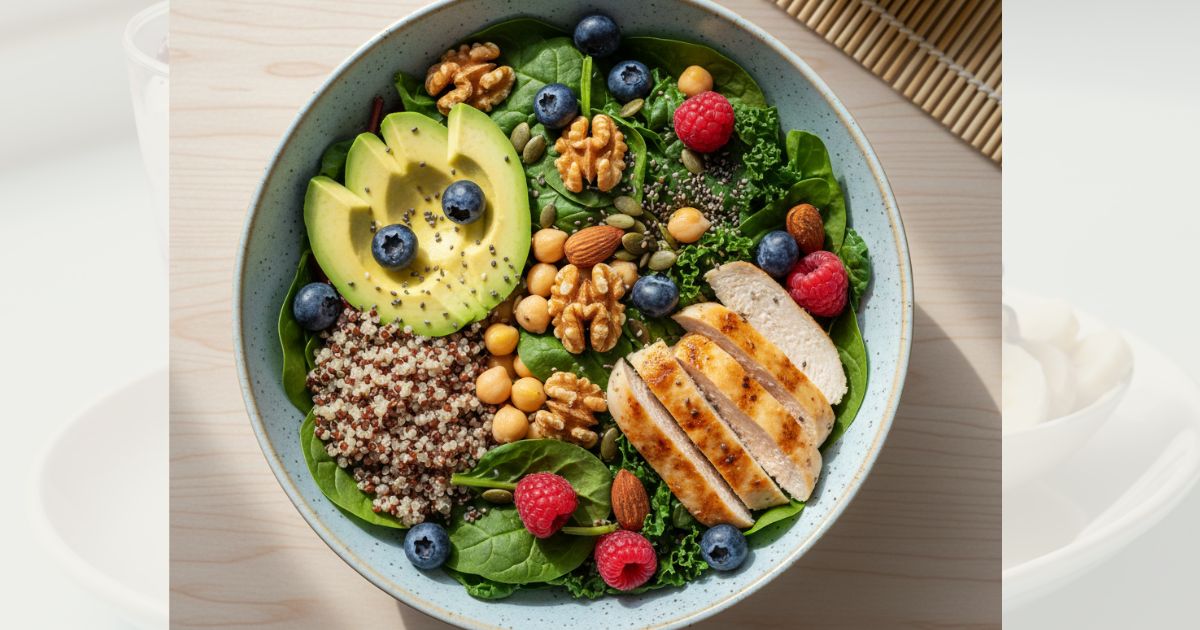
High-Protein Salads That Help Reduce Anxiety and Support Gut Health
Stress and anxiety have become a constant part of our daily routines. Many of us don’t realize that the meals we choose, especially at lunch, play a significant role in how we feel physically and mentally throughout the day. Low-protein, high-carb lunches may give a quick burst of energy, but they often lead to crashes, mood swings, and bloating. Poor digestion paired with insufficient protein can make it harder to stay focused, calm, and energized.
Fortunately, there’s a simple solution: high-protein salads for anxiety and gut health designed to stabilize blood sugar, support the gut microbiome, and reduce anxiety. These salads are nutrient-rich, portable, and require minimal prep, making them perfect for busy schedules. Incorporating them into your routine can help improve digestion, enhance mental clarity, and keep your mood balanced.
“Many people don’t realize that what they eat at lunch directly impacts their mood and digestion for the rest of the day.”
Why High-Protein Salads Improve Mood and Digestion
- Protein fuels neurotransmitters: Helps stabilize mood and improve focus.
- Fiber supports gut bacteria: Reduces bloating and inflammation, promoting better digestion.
- Healthy fats stabilize blood sugar: Provide long-lasting energy and prevent crashes.
- Easy to prep and portable: Perfect for lunch or dinner on busy days.
How Protein and Fiber Support Gut + Mind
- Amino acids: Proteins are made of amino acids, which are essential for producing neurotransmitters like serotonin and dopamine. These chemicals regulate mood, calm anxiety, and help your brain communicate efficiently. Including amino-acid-rich ingredients in salads contributes to protein-packed meals for better mood and mental clarity throughout the day.
- Fiber and prebiotics: Fiber nourishes your gut microbiome, the community of bacteria that supports digestion and overall health. Prebiotic-rich ingredients like greens, legumes, and seeds feed these beneficial bacteria, improving gut function and naturally reducing stress. Salads that improve gut bacteria and reduce stress are ideal for daily lunch or dinner.
- Omega-3 and antioxidants: Healthy fats from nuts, seeds, or fatty fish, combined with antioxidant-rich vegetables, help lower inflammation and combat stress. These nutrients support the gut–brain connection, making your meals anxiety-reducing protein meals that balance both mental and digestive health.
- Stabilizes blood sugar: Balanced protein, fiber, and healthy fats prevent spikes and crashes in blood sugar, reducing irritability and mood swings. Regularly including easy gut-friendly lunch salads in your diet ensures consistent energy without the highs and lows of high-carb meals.
For more high-protein meals that balance gut and mood, on the gut–brain axis foods.
7 High-Protein Salad Ideas
These seven high-protein salads combine nutrient-rich ingredients that support gut health, reduce anxiety, and improve mood. Each salad is easy to prepare, portable, and perfect for busy people seeking quick, nourishing meals.
Quinoa + Spinach + Chickpeas + Avocado Salad
This salad improves gut bacteria and reduces stress naturally by combining fiber-rich chickpeas and spinach with protein-packed quinoa and healthy fats from avocado. It stabilizes blood sugar while promoting mental clarity.
Ingredients & Portion: 1 cup cooked quinoa, 1 cup fresh spinach, ½ cup chickpeas, ½ avocado, drizzle of olive oil. Serves 1–2.
Best for: Students, professionals, or anyone needing a quick, energizing lunch.
Grilled Chicken + Kale + Walnuts + Berries Salad
Protein from chicken fuels neurotransmitters, while kale and berries feed gut bacteria and reduce inflammation. Walnuts provide omega-3s to calm stress naturally.
Ingredients & Portion: 4 oz grilled chicken, 1 cup kale, ¼ cup walnuts, ½ cup mixed berries, olive oil & lemon dressing. Serves 1–2.
Best for: Busy parents or professionals looking for an anti-anxiety salad recipe for busy people.
For quick, no-prep alternatives, see No-Cook High-Protein Meals for Busy Days.
Lentil + Mixed Greens + Pumpkin Seeds Salad
This plant-based salad enhances gut microbiome diversity and reduces anxiety by combining protein-rich lentils, mixed greens, and nutrient-dense pumpkin seeds. Ideal for boosting mood naturally.
Ingredients & Portion: 1 cup cooked lentils, 2 cups mixed greens, 2 tbsp pumpkin seeds, olive oil & apple cider vinegar dressing. Serves 1–2.
Best for: Vegetarians, health-conscious individuals, or anyone wanting easy gut-friendly lunch salads.
Tuna + Cucumber + Chickpeas + Olive Oil Salad
Protein-packed tuna with chickpeas provides amino acids for neurotransmitter support. Cucumbers hydrate and soothe digestion, creating a gut-friendly high-protein salad that improves mood and reduces stress.
Ingredients & Portion: 1 can tuna (in water), ½ cup chickpeas, 1 cup sliced cucumber, 1 tbsp olive oil. Serves 1.
Best for: Professionals needing a portable, low-effort lunch.
Tofu + Broccoli + Brown Rice + Almonds Salad
This plant-based protein salad combines tofu, fiber-rich broccoli, and complex carbs from brown rice to stabilize blood sugar and improve digestion. Almonds add healthy fats that reduce stress naturally.
Ingredients & Portion: ½ cup firm tofu, 1 cup steamed broccoli, ½ cup cooked brown rice, 2 tbsp sliced almonds. Serves 1–2.
Best for: Vegans, students, or anyone seeking anti-anxiety salad recipes for busy people.
Control sugar cravings with High-Protein Desserts That Help Reduce Stress Eating and Sugar Cravings.
Egg + Arugula + Cherry Tomatoes + Flax Seeds Salad
Protein from eggs and omega-3s from flax seeds promote neurotransmitter production and reduce inflammation. Arugula and tomatoes provide fiber for gut health, making this salad perfect for mental wellness.
Ingredients & Portion: 2 boiled eggs, 2 cups arugula, ½ cup cherry tomatoes, 1 tbsp flax seeds. Serves 1.
Best for: Busy professionals or anyone needing a nutrient-rich, quick lunch.
Salmon + Mixed Greens + Avocado + Chia Seeds Salad
Fatty salmon provides omega-3s to calm stress, while avocado and chia seeds offer healthy fats and fiber. Mixed greens feed gut bacteria, making this a complete gut-friendly high-protein salad that supports mood.
Ingredients & Portion: 4 oz cooked salmon, 2 cups mixed greens, ½ avocado, 1 tbsp chia seeds, olive oil & lemon dressing. Serves 1–2.
Best for: Anyone looking for a brain-boosting, anti-anxiety protein-packed meal.
Best Time to Eat High-Protein Salads
- Morning or lunch: Provides sustained energy and stable blood sugar throughout the day.
- Pre-study or pre-work: Enhances focus, mental clarity, and helps you stay alert.
- Evening: Supports stress relief, gut health, and promotes calm digestion before bedtime.
“Timing your salad can enhance mental clarity and maintain balanced digestion throughout the day.”
Tips for Making Salads More Effective
- Use unsweetened dressings, or a simple olive oil + lemon combination to avoid unnecessary sugar and calories.
- Include seeds, nuts, or legumes for extra protein, fiber, and healthy fats that support gut bacteria and mood.
- Rotate greens regularly to ensure a variety of micronutrients and flavors.
- Pay attention to portion sizes to balance calories and protein for your energy needs.
Common Mistakes to Avoid
- Using too much dressing can add extra sugar and fat, reducing the salad’s health benefits.
- Skipping protein will make the salad less effective for mood stabilization and satiety.
- Not washing greens properly can lead to digestive discomfort or bloating.
“Even nutrient-rich salads can backfire if prepared or eaten carelessly.”
How Often to Eat High-Protein Salads
- 1–2 servings per day are ideal to support mood, digestion, and energy levels.
- Replace one main meal — lunch or dinner — for a convenient and nutrient-dense option.
- Adjust protein portions according to your body needs and activity level.
Internal links suggestions: For more gut + mood meals, see Gut–Brain Axis Foods.
For busy lunch or dinner solutions, check No-Cook High-Protein Meals for Busy Days.
For optional sweet craving control, try High-Protein Desserts.
Conclusion
High-protein salads are nutrient-rich, stress-reducing, and gut-friendly. They help improve mood, digestion, and energy while being easy to prepare and portable for busy lifestyles.
“By choosing protein-packed, gut-friendly salads, you can reduce anxiety, support mental clarity, and enjoy meals that work for your body and mind.”
According to Harvard Health, a diet rich in protein and fiber supports gut health and may influence mood and mental well-being.
Frequently Asked Questions
Can high-protein salads really reduce anxiety?
Yes! High-protein salads for anxiety and gut health provide amino acids that help produce neurotransmitters like serotonin and dopamine. These neurotransmitters stabilize mood, reduce stress, and support mental clarity. Combining protein with fiber-rich greens further improves gut bacteria and digestion, making these salads an easy way to manage daily anxiety naturally.
Which salads are best for gut-friendly protein meals?
Gut-friendly high-protein salads that include legumes, greens, seeds, or fatty fish nourish your gut microbiome and reduce bloating. Salads that improve gut bacteria and reduce stress, like lentil + mixed greens or salmon + avocado combinations, are ideal for balancing digestion and mental wellness.
How can I make easy gut-friendly lunch salads quickly?
Choose ingredients that require minimal prep, like pre-washed greens, canned beans, or grilled protein. Anti-anxiety salad recipes for busy people often include ready-to-use protein, fiber, and healthy fats. Adding seeds or nuts enhances both flavor and nutrient density without extra cooking time.
How often should I eat these high-protein salads?
1–2 servings per day can support mood, gut health, and energy. Replace one main meal, like lunch or dinner, with a protein-packed salad. Adjust portions of protein and fiber based on your activity level to maximize benefits for digestion and mental wellness.
Disclaimer
The information provided in this article is for general informational purposes only and is not a substitute for professional medical advice. Always consult a qualified healthcare provider before making changes to your diet or if you have concerns about anxiety, digestion, or other health conditions. Individual results may vary.
About the Author
This article is written by the VitaGlowZenith Editorial Team. We provide easy-to-understand, evidence-based wellness tips to help you make better health and lifestyle choices.