Omega-3 and High-Protein Foods That Support Brain Function and Mood
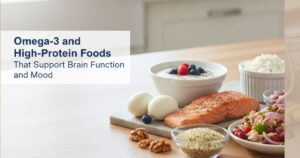
Do you often feel brain fog in the middle of your workday, struggle to focus, or notice sudden mood swings? Maybe you reach for a cup of coffee or a sugary snack to get through the afternoon slump. While these quick fixes give temporary energy, they don’t address the root cause of low focus and fluctuating mood. The real solution lies in giving your brain the nutrients it truly needs. Incorporating Omega-3 and High-Protein Foods That Support Brain Function and Mood into your daily meals can naturally improve mental clarity, stabilize your mood, and boost your overall cognitive performance. By the end of this article, you’ll know practical, food-based ways to support your focus, memory, and emotional well-being.
For more on how nutrition affects mental clarity, check out our Gut–Brain Axis Foods guide.
Why Brain Needs Omega-3 + Protein Together
Your brain relies on both omega-3 foods for brain health and high-protein nutrients to function optimally. Omega-3 fatty acids support neuron structure and ensure smooth neurotransmitter signaling, which keeps your brain alert and focused. Protein provides essential amino acids that help produce serotonin and dopamine, the key chemicals behind mood, motivation, and memory. Together, they form a powerful combo that naturally improves focus, memory, and emotional balance.
Brain-Boosting Nutrient Combo:
- Omega-3
- Protein
Signs Your Brain Is Lacking These Nutrients:
- Brain fog or sluggish thinking
- Mood irritability or low motivation
- Poor memory or forgetfulness
- Afternoon mental crash
- Sugar cravings during stress
7 Omega-3 and High-Protein Foods That Support Brain Function and Mood
1. Salmon
Omega-3: Rich in EPA and DHA fatty acids that support neuron health.
Protein: High-quality protein aids neurotransmitter production.
How it helps: Improves focus, stabilizes mood, and supports memory retention.
How to eat: Grill or bake salmon 2–3 times per week for a natural brain boost.
2. Chia Seeds + Greek Yogurt
Omega-3: Chia seeds provide ALA, supporting healthy brain function.
Protein: Greek yogurt supplies mood-boosting protein.
How it helps: Reduces afternoon energy crashes and enhances concentration.
How to eat: Add chia seeds to a cup of Greek yogurt for a quick, brain-friendly snack. For more options, read High-Protein Snacks That Don’t Spike Blood Sugar.
3. Eggs
Omega-3: Some eggs are enriched with DHA, supporting memory and cognitive function.
Protein: Complete protein helps produce serotonin and dopamine.
How it helps: Enhances focus in the morning and maintains stable mood.
How to eat: Boiled, poached, or in an omelet with vegetables for a nutritious start to your day.
4. Walnuts + Cottage Cheese
Omega-3: Walnuts provide ALA for neuron protection.
Protein: Cottage cheese delivers high-quality protein for neurotransmitter support.
How it helps: Improves concentration, reduces irritability, and supports long-term brain health.
How to eat: Pair a small handful of walnuts with cottage cheese for a simple, brain-friendly snack.
5. Sardines
Omega-3: Packed with DHA and EPA for neuron structure and signaling.
Protein: Complete protein helps maintain stable mood.
How it helps: Boosts memory, focus, and cognitive performance naturally.
How to eat: Enjoy sardines in salads or on whole-grain toast 2–3 times per week.
6. Hemp Seeds + Smoothie
Omega-3: Hemp seeds supply ALA to support brain function.
Protein: Protein content enhances mood and focus.
How it helps: Supports concentration during stressful or busy days.
How to eat: Blend hemp seeds into your favorite protein smoothie for a nutrient-packed drink.
7. Tuna + Bean Salad
Omega-3: Tuna provides DHA and EPA for healthy neurons.
Protein: Beans and tuna combine for a high-protein, mood-supporting meal.
How it helps: Enhances memory, focus, and reduces stress-related cravings.
How to eat: Mix canned tuna with beans, olive oil, and fresh vegetables for an easy, brain-friendly lunch.
Who Should Eat These Foods Daily:
- Work-from-home professionals
- Students
- People with brain fog
- Mood swings
- Stress eating tendencies
How These Foods Improve Focus in 7 Days
- Day 1–2: Stable energy throughout the day as your body begins to utilize omega-3 foods for brain health and high-protein nutrients efficiently.
- Day 3–4: Noticeably less brain fog, improved clarity, and smoother concentration during tasks.
- Day 5–6: Better mood, reduced irritability, and more consistent focus thanks to neurotransmitter support from protein.
- Day 7: Sharper focus, improved memory recall, and a more balanced emotional state. You’ll truly notice the difference!
Simple Brain-Boosting Meal Ideas (No Cooking Stress)
- Omega-3 Yogurt Bowl: Mix chia seeds, flaxseeds, and berries into Greek yogurt for a nutrient-packed breakfast.
- Egg Walnut Toast: Whole-grain toast topped with boiled eggs and crushed walnuts for protein and healthy fats.
- Salmon Salad: Combine baked salmon, mixed greens, and olive oil for a quick, brain-friendly lunch.
- Protein Chia Pudding: Blend chia seeds with protein-rich milk or yogurt and let it set overnight for an easy snack.
- Tuna Bean Bowl: Mix canned tuna with beans and vegetables for a no-cook, high-protein, omega-3 meal. For more evening protein ideas, check this guide.
Who Should Be Careful:
- People with fish allergy
- Kidney patients (protein caution)
- Pregnant women (consult first)
- People on blood thinners (omega-3 caution)
Why Coffee Cannot Fix Brain Fog but These Foods Can
Coffee can give you a temporary lift, but it doesn’t feed your brain cells or improve long-term focus. That quick buzz fades, often leaving you craving sugar or another cup by mid-afternoon. In contrast, omega-3 foods for brain health and high-protein nutrients provide lasting nourishment. They support neuron structure, neurotransmitter production, and steady energy throughout the day. Adding salmon, eggs, chia seeds, or protein smoothies (see our guide) to your routine helps your brain function naturally — without the crash.
Grocery List for the Week (USA-Friendly)
- Salmon
- Eggs
- Greek Yogurt
- Chia Seeds
- Walnuts
- Tuna
- Hemp Seeds
(Tip: Keep this list handy for easy meal prep and stress-free grocery shopping.)
Conclusion
You don’t need expensive supplements if you include Omega-3 and High-Protein Foods That Support Brain Function and Mood daily. Small, consistent changes — like adding 1–2 foods from our list each day — can make a big difference in focus, mood, and energy levels. Start simple: maybe a chia yogurt breakfast today, salmon salad tomorrow, or a protein smoothie this evening (evening protein ideas). Over time, your brain will function more efficiently, your energy will stabilize, and your mood will feel more balanced. For more on brain fog and digestion, read our detailed guide.
Remember: steady nutrition beats quick fixes. Your brain deserves foods that truly support its function — not temporary energy spikes.
For further reading on the benefits of omega-3 for brain health, see Healthline.
Frequently Asked Questions
What are the best Omega-3 and High-Protein Foods That Support Brain Function and Mood?
The best options include salmon, eggs, Greek yogurt with chia seeds, walnuts with cottage cheese, sardines, tuna with beans, and hemp seeds in smoothies. These foods provide the right balance of omega-3 fatty acids and protein that help improve focus, memory, and emotional balance naturally.
How quickly do Omega-3 and high-protein foods improve focus and mood?
Many people start noticing stable energy and reduced brain fog within a few days. Consistent intake for a week often leads to better mood stability, improved concentration, and sharper memory recall.
Can I skip supplements if I eat omega-3 and protein-rich foods daily?
Yes. If you regularly include omega-3 foods for brain health and high-protein foods for mood in your meals, supplements are often unnecessary. Whole foods provide better absorption and additional nutrients that pills cannot offer.
Are these foods helpful for brain fog and low motivation?
Yes. Brain fog and low motivation are often linked to poor neurotransmitter support. Protein supplies amino acids for serotonin and dopamine, while omega-3 supports neuron structure, helping your brain function more efficiently.
Can these foods help students and work-from-home professionals?
Absolutely. These brain boosting protein foods are especially useful for people who need sustained concentration, stable energy, and improved memory throughout long work or study hours.
Disclaimer
This article is for informational purposes only and is based on nutrition research and practical dietary approaches. It is not intended as medical advice, diagnosis, or treatment. Always consult a qualified healthcare professional before making significant dietary changes, especially if you have medical conditions, allergies, or are taking medications.
About the Author
This article is written by the VitaGlowZenith Editorial Team. We provide easy-to-understand, evidence-based wellness tips to help you make better health and lifestyle choices.